
At Bodacious Knives, every blade we craft carries our story — one that began in 2002 in a small family workshop in Wazirabad, where knife-making has been a generations-old tradition. As a fully registered USA-based company, we build every knife to be sharpened, cared for, and passed down for a lifetime.
A great knife is only as good as the care it gets. Even the best 440C stainless steel or high carbon stainless blade will let you down if it’s never sharpened or gets left dirty and damp after a long day of use. The good news is that keeping your knife in top shape doesn’t take special skills or expensive equipment, just a little routine and the right technique. Here’s everything you need to know to keep your hunting, fillet, or everyday knife sharp and ready for years to come.
Why Regular Knife Maintenance Matters
A dull knife isn’t just frustrating, it’s actually more dangerous than a sharp one because it requires more force to cut, which increases the chance of it slipping. Regular sharpening and cleaning also protects your investment. A quality handmade knife can last a lifetime and even be passed down, but only if the blade is kept free of rust and the edge is maintained before it gets too far gone to fix easily.
Tools You’ll Need to Sharpen Your Knife
- A whetstone (a combination stone with a coarse and fine side works best)
- A small bowl of water or honing oil, depending on your stone type
- A clean cloth for wiping the blade
- A leather strop or old belt for final polishing (optional but recommended)
Step-by-Step: How to Sharpen Your Knife on a Whetstone
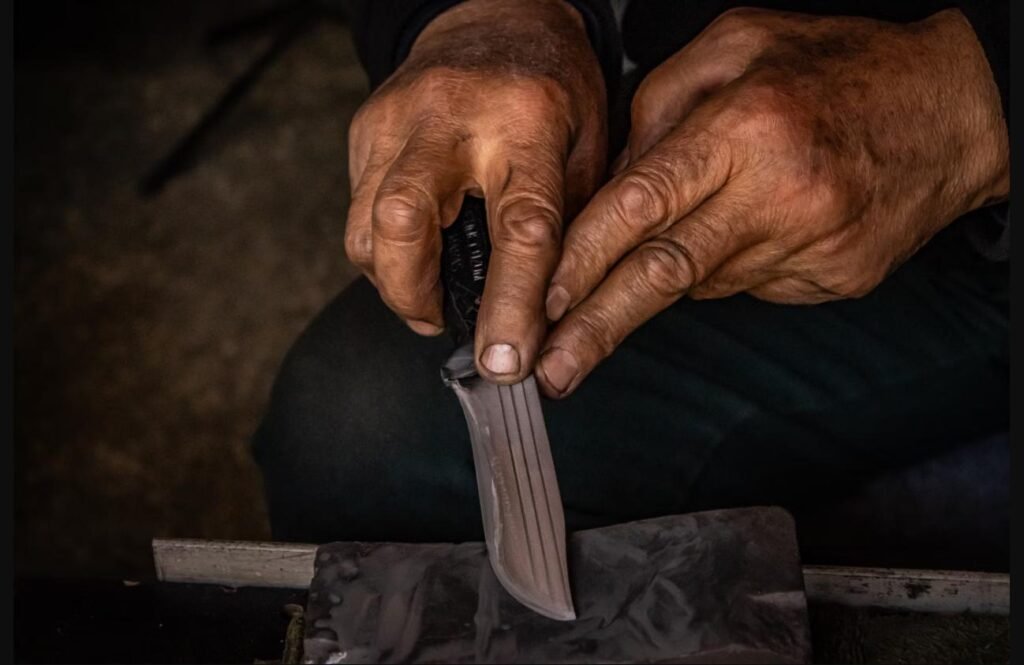
Start with the coarse side of your whetstone if the blade is very dull, or the fine side for routine touch-ups. Hold the blade at roughly a 20 degree angle against the stone, this is about the width of two stacked coins between the spine and the stone. Draw the blade across the stone in a smooth, sweeping motion, as if you were trying to shave a thin layer off the stone’s surface, moving from the heel of the blade to the tip. Repeat this motion 8 to 10 times on one side, then flip the knife and repeat the same number of strokes on the other side to keep the edge even. Finish by alternating a few light strokes on each side until the edge feels consistently sharp along its full length.
Cleaning and Oiling Your Blade
After every use, wipe the blade down with a clean, dry cloth to remove moisture, blood, or food residue before it has a chance to sit on the steel. For high carbon stainless blades especially, a light coat of mineral oil or dedicated knife oil after cleaning helps prevent rust spots from forming, even though the steel is corrosion resistant. Avoid putting a knife away wet or storing it in a sealed leather sheath while still damp, since trapped moisture is one of the most common causes of blade corrosion.
Caring for Stag Horn, Wood, and Synthetic Handles
Your handle needs attention too, not just the blade. Genuine stag horn and hardwood handles benefit from an occasional wipe with a slightly damp cloth followed by drying, and should never be soaked or left in direct sunlight for long periods, which can cause natural materials to crack over time. A small amount of mineral oil rubbed into a wood handle every few months keeps it from drying out. Synthetic TPR handles are much lower maintenance and can simply be wiped clean, making them a good choice if you want a truly low fuss grip.
How to Store Your Knife Properly
Always store your knife clean and completely dry. A leather sheath is great for carrying but not ideal for long-term storage, since leather can hold moisture against the blade, so consider removing the knife from its sheath for extended storage periods. Keep knives in a dry area away from humidity, and if you live somewhere especially damp, a light film of oil on the blade adds an extra layer of protection between sharpenings.
Frequently Asked Questions
How often should I sharpen my knife?
It depends on use, but most hunting and kitchen knives benefit from a light touch-up every few uses and a full sharpening session every few months.
What angle should I use to sharpen a hunting knife?
A 20 degree angle per side works well for most hunting and fillet knives, offering a good balance of sharpness and edge durability.
Can stainless steel knives still rust?
Yes, stainless steel resists corrosion but is not fully rust proof, especially if left wet or dirty for extended periods, so drying and light oiling still matter.
Do I need an expensive sharpening kit?
No. A basic combination whetstone and a few minutes of practice are enough to keep most knives sharp and ready to use.
Final Thoughts
A few minutes of regular care is all it takes to keep your knife performing the way it did on day one. Whether you’re maintaining a hunting knife, a fillet knife, or an everyday folder, cleaning, oiling, and proper sharpening will extend its life for years. Looking to add a knife built to last with proper care? Browse the full collection of handmade knives at Bodacious Knives.