Our story began in 2002 in a small workshop in Wazirabad, where master craftsmen taught us that a true hunting knife is forged with heart, not just machines. Today, Bodacious Knives is a proud, fully registered USA-based company building premium hunting blades that are handmade to last a lifetime.
Buying a hunting knife feels simple until you start comparing blade steels, tang construction, and handle materials, and suddenly you’re staring at a dozen options that all claim to be the “best hunting knife” on the market. At Bodacious Knives, customers ask us almost every week what actually separates a great hunting knife from an average one, so we put together this buyer’s guide to walk you through exactly what to look for before you spend your money.
What to Look for in a Hunting Knife, At a Glance
- Blade steel: 440C stainless steel or high carbon stainless steel
- Blade shape: drop point, clip point, or skinner
- Tang construction: full tang for maximum strength
- Handle material: stag horn, hardwood, or textured synthetic
- Blade length: typically 3.5 to 7.5 inches depending on the job
Fixed Blade or Folding Knife: What’s Actually Better for Hunting?
This is usually the first fork in the road for new hunters. A fixed blade hunting knife has no moving parts, which means no hinge to fail and no lock to wear out when you’re elbow deep in field dressing work. It’s stronger, easier to clean, and holds up better to repeated hard use season after season. Folding knives have their place for light everyday tasks, but when you’re actually out in the field breaking down game, a solid fixed blade hunting knife is almost always the more dependable choice.
Blade Steel Explained: 440C vs. High Carbon Stainless
The steel is the single biggest factor in how a hunting knife performs. 440C stainless steel is a popular choice because it resists corrosion well and holds a good working edge, making it forgiving for hunters who are still learning to maintain their gear. High carbon stainless steel, on the other hand, takes a sharper edge and holds it longer, which matters when you’re breaking down a deer and don’t want to stop and resharpen halfway through. Neither steel is objectively “better,” it comes down to how often you’re willing to sharpen versus how sharp you want that edge to stay.
Blade Shape Matters More Than You’d Think
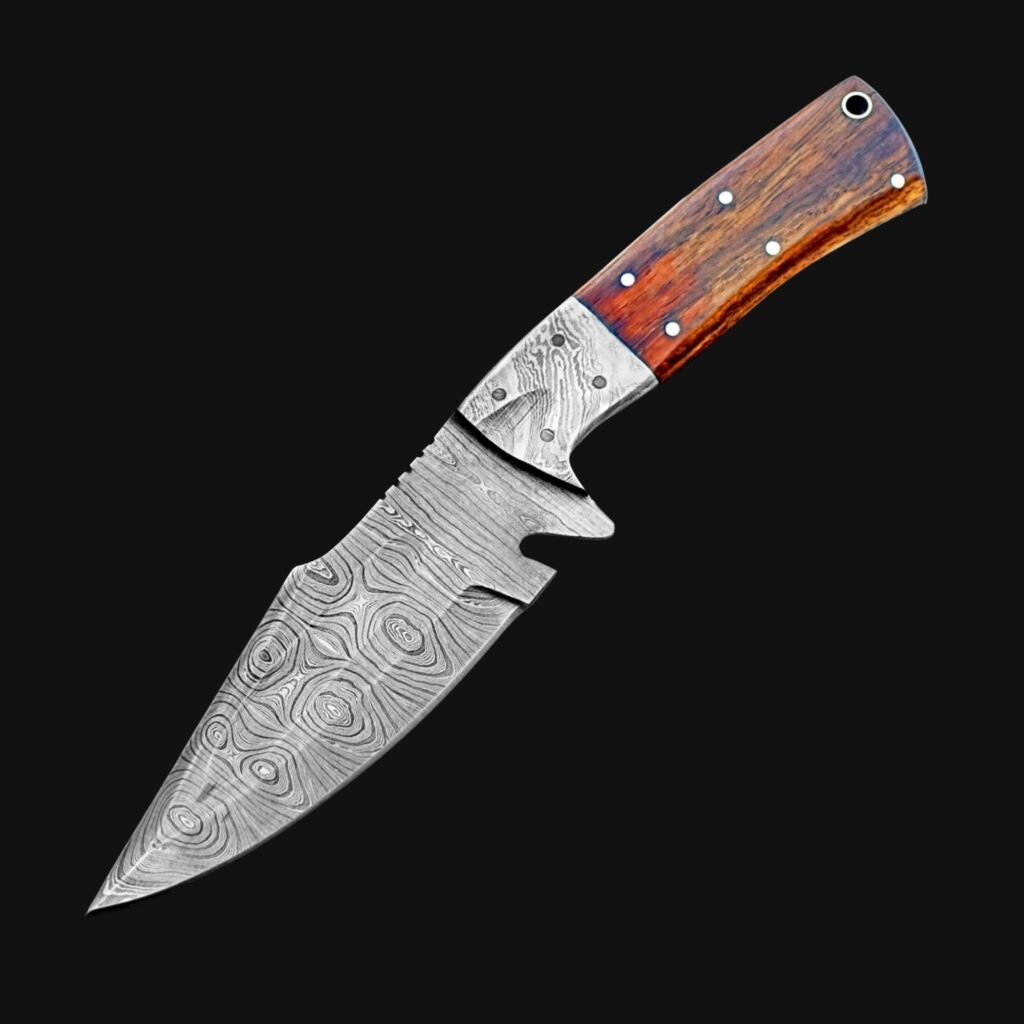
Not all hunting knife blades are shaped the same, and the shape changes what the knife is actually good at. A drop point blade has a strong, controllable tip and a wide belly, making it a great all-around choice for skinning and general field work. A clip point, like the profile on our Stag Horn Hunting Knife, gives you a sharper, more precise tip for detail work while still offering a full cutting edge for tougher tasks. A dedicated skinner has a more curved belly built specifically for separating hide from meat quickly and cleanly. If you only own one hunting knife, a drop point or clip point will serve you best across the widest range of tasks.
Handle Material and Grip
A hunting knife handle has to work when your hands are cold, wet, or covered in blood, so grip matters as much as looks. Genuine stag horn is a traditional favorite because its natural texture bites into your palm and every handle is naturally unique. Hardwood handles offer a similar classic feel with a bit more consistency, while textured synthetic grips are built for anglers and hunters who want maximum grip security in wet conditions without worrying about the material warping over time.
Blade Length and Full Tang Construction
For most hunting tasks, a blade between 3.5 and 5 inches is plenty, though larger bowie-style hunting knives in the 7 to 8 inch range give you added versatility for batoning wood or heavier camp chores. Just as important as length is tang construction. A full tang, where the steel runs the entire length of the handle, gives the knife far more strength than a partial tang, which matters if you ever need to pry, baton, or apply hard pressure in the field.
Frequently Asked Questions
What is the best steel for a hunting knife?
440C stainless steel and high carbon stainless steel are both excellent choices. 440C is easier to maintain and resists rust well, while high carbon stainless holds a sharper edge for longer between sharpenings.
Should I get a fixed blade or folding hunting knife?
For actual field dressing and hunting tasks, a fixed blade hunting knife is stronger, more reliable, and easier to clean than a folding knife.
What blade length is best for hunting?
Most hunters do best with a 3.5 to 5 inch blade for field dressing, with larger blades reserved for camp tasks like batoning wood.
Is a full tang knife worth it?
Yes. A full tang hunting knife is significantly stronger and more durable than a partial tang knife, especially under hard use.
Final Thoughts: Choosing Your Next Hunting Knife
The right hunting knife comes down to matching steel, blade shape, and handle material to how you actually hunt. If you want a knife built the traditional way, with real stag horn, 440C steel, and a full tang for strength, browse our handmade hunting knives at Bodacious Knives and find the one that will go with you into the field for years to come.